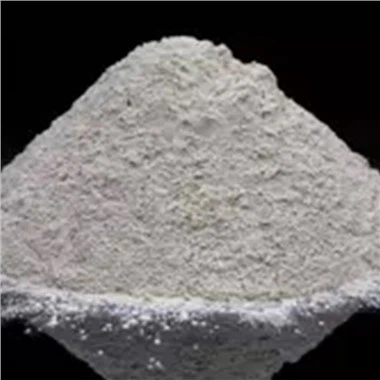
Hey there! As a supplier of Food Grade Granular CMC, I've been getting a lot of questions lately about how the particle size of this stuff affects its performance in food. So, I thought I'd take a few minutes to break it down for you.
First off, let's talk about what CMC is. CMC, or Carboxymethyl Cellulose, is a water-soluble polymer that's derived from cellulose. It's commonly used in the food industry as a thickener, stabilizer, emulsifier, and binder. You can find it in all sorts of products, from ice cream and yogurt to baked goods and sauces.
Now, when it comes to Food Grade Granular CMC, the particle size can have a pretty big impact on how it performs in food. There are basically three main factors to consider: solubility, viscosity, and dispersion.
Let's start with solubility. The solubility of CMC is crucial because it determines how well it can dissolve in water and other liquids. Generally speaking, smaller particle sizes tend to have better solubility. Why is that? Well, smaller particles have a larger surface area-to-volume ratio. This means that there's more surface area available for the water molecules to interact with the CMC particles. As a result, the CMC can dissolve more quickly and completely.
For example, if you're making a sauce or a dressing, you want the CMC to dissolve smoothly without any clumps. A finer granular CMC will be much easier to dissolve, giving you a more homogeneous product. On the other hand, larger particle sizes may take longer to dissolve, and you might end up with some undissolved bits in your final product.
Next up is viscosity. Viscosity refers to the thickness or resistance to flow of a liquid. CMC is often used to increase the viscosity of food products, giving them a thicker, creamier texture. The particle size of CMC can affect how quickly and how much it thickens a solution.
Smaller particle sizes typically result in a faster increase in viscosity. This is because they dissolve more rapidly, allowing the CMC molecules to start interacting with each other and with the other components in the solution sooner. In some cases, you might be able to achieve the desired viscosity with a lower concentration of finer CMC compared to a coarser one.
However, it's important to note that the relationship between particle size and viscosity isn't always straightforward. Other factors, such as the degree of substitution (DS) of the CMC and the pH of the solution, can also play a role. But in general, if you're looking for a quick thickening effect, a finer granular CMC is a good choice.
Finally, let's talk about dispersion. Dispersion is all about how well the CMC particles are distributed throughout the food product. A good dispersion ensures that the CMC can发挥 its functions evenly, resulting in a consistent texture and quality.
Smaller particle sizes are generally easier to disperse. They can mix more uniformly with other ingredients, reducing the risk of clumping or uneven distribution. This is especially important in products where a smooth and consistent texture is desired, like ice cream or yogurt.
In contrast, larger particle sizes may be more difficult to disperse evenly. They might settle at the bottom of the container or form clumps during mixing. This can lead to inconsistencies in the texture and quality of the final product.
Now, you might be wondering which particle size is the best for your specific application. Well, it really depends on the type of food product you're making and your specific requirements.


If you're making a product that requires a quick thickening and a smooth texture, such as a sauce or a dressing, a finer granular CMC with a particle size of around 100 - 200 mesh might be a good choice. This will ensure fast solubility, rapid viscosity increase, and easy dispersion.
On the other hand, if you're making a product that can tolerate a slower thickening process and where a more coarse texture is acceptable, such as some types of baked goods, a coarser granular CMC with a particle size of around 40 - 80 mesh could work. This can also be more cost-effective in some cases.
It's also worth mentioning that some food manufacturers might use a combination of different particle sizes to achieve the desired performance. For example, they might use a finer CMC for initial dissolution and a coarser one for long-term stability.
As a supplier of Food Grade Granular CMC, I understand that every customer has unique needs. That's why we offer a range of particle sizes to suit different applications. Whether you're a small-scale artisanal food producer or a large industrial manufacturer, we can help you find the right CMC for your product.
If you're interested in learning more about our Food Grade Granular CMC or have any questions about how the particle size might affect your specific application, don't hesitate to get in touch. We're here to provide you with the best solutions and support.
In conclusion, the particle size of Food Grade Granular CMC can have a significant impact on its performance in food. By understanding the relationship between particle size, solubility, viscosity, and dispersion, you can make an informed decision about which type of CMC is right for your product.
So, if you're looking for high-quality Food Grade Granular CMC and expert advice, reach out to us. We're ready to help you take your food products to the next level.
References
- Davidson, R. L. (1980). Handbook of Water-Soluble Gums and Resins. McGraw-Hill.
- Whistler, R. L., & BeMiller, J. N. (eds.). (1993). Industrial Gums: Polysaccharides and Their Derivatives. Academic Press.