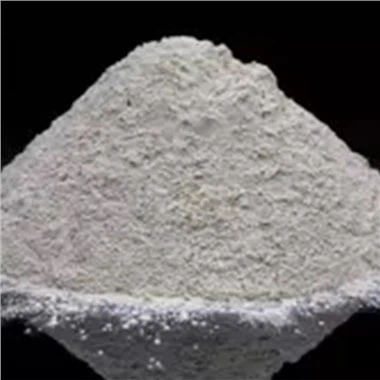
Hey there! As a supplier of Pating Grade Organoclay, I've been getting a lot of questions lately about how it affects the foam stability of a system. So, I thought I'd take a deep dive into this topic and share some insights with you all.
First off, let's talk a bit about what Pating Grade Organoclay is. It's a type of organophilic clay that's specifically designed for use in various applications, especially those related to painting. There are different kinds, like the Guanual Painting Grade Organoclay and the Fine Powder Organoclay. These clays are treated with organic compounds to make them more compatible with organic solvents and polymers, which is super important in many industrial processes.
Now, onto foam stability. Foam is basically a dispersion of gas bubbles in a liquid or solid medium. In many industrial applications, foam can be both a blessing and a curse. For example, in some painting processes, a certain amount of foam can help with the application, making the paint spread more evenly. But too much foam can lead to problems like uneven coating, air pockets, and a poor finish. That's where Pating Grade Organoclay comes in.
One of the key ways Pating Grade Organoclay affects foam stability is through its ability to modify the rheological properties of the system. Rheology is all about how a material flows and deforms under stress. When you add Pating Grade Organoclay to a system, it can increase the viscosity of the liquid phase. This increased viscosity makes it harder for the gas bubbles to rise to the surface and coalesce, which helps to keep the foam stable.
Think of it like this: imagine you have a glass of soda. When you first pour it, there's a lot of foam on top. But if you add a thickening agent to the soda, the foam will take longer to disappear because it's harder for the bubbles to move through the thicker liquid. The same principle applies to systems with Pating Grade Organoclay.
Another important factor is the surface activity of the organoclay. Pating Grade Organoclay particles can adsorb at the gas - liquid interface of the foam bubbles. This adsorption creates a protective layer around the bubbles, preventing them from bursting. The organoclay particles act like a shield, keeping the gas inside the bubbles and maintaining the foam structure.
In addition, the organoclay can interact with other components in the system. For example, in a paint formulation, it can interact with polymers and surfactants. These interactions can further enhance the foam stability. The polymers can form a network with the organoclay particles, which provides additional support to the foam bubbles. And the surfactants can help to disperse the organoclay particles more evenly, ensuring that the foam - stabilizing effect is consistent throughout the system.
Let's look at some real - world examples. In the automotive painting industry, foam stability is crucial for achieving a high - quality finish. When using water - based paints, which are more prone to foaming compared to solvent - based paints, Pating Grade Organoclay can be added to the paint formulation. This helps to control the foam during the spraying process, resulting in a smooth and even coating.
In the construction industry, where paints and coatings are used for various applications like wall painting and floor coating, Pating Grade Organoclay can also play a vital role. It can improve the foam stability during the mixing and application of the paint, reducing the chances of defects and ensuring a long - lasting finish.
However, it's important to note that the amount of Pating Grade Organoclay you add matters. Adding too little may not have a significant effect on foam stability, while adding too much can lead to other problems. For example, an excessive amount of organoclay can make the system too viscous, making it difficult to apply the paint or coating. So, it's all about finding the right balance.
To determine the optimal amount of Pating Grade Organoclay for a specific system, you need to conduct some experiments. Start by adding small amounts of the organoclay to the system and measuring the foam stability. You can use techniques like foam height measurement, foam half - life determination, and visual inspection to evaluate the results. Based on these experiments, you can fine - tune the amount of organoclay to achieve the desired foam stability.
In conclusion, Pating Grade Organoclay has a significant impact on the foam stability of a system. Its ability to modify rheological properties, adsorb at the gas - liquid interface, and interact with other components makes it a valuable additive in many industrial applications, especially in the painting and coating industries.
If you're in the business of painting, coatings, or any other industry where foam stability is an issue, I highly recommend considering Pating Grade Organoclay. Whether you're interested in the Guanual Painting Grade Organoclay or the Fine Powder Organoclay, we have the right product for you. If you'd like to learn more about our products or discuss how Pating Grade Organoclay can benefit your specific application, don't hesitate to reach out. We're here to help you find the best solution for your needs and improve the quality of your products.
References


- Bird, R. B., Armstrong, R. C., & Hassager, O. (1987). Dynamics of Polymeric Liquids: Volume 1, Fluid Mechanics. Wiley.
- Hunter, R. J. (2001). Foundations of Colloid Science. Oxford University Press.
- Steffe, J. F. (1996). Rheological Methods in Food Process Engineering. Freeman Press.