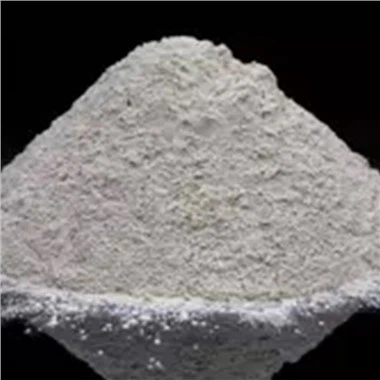
Food products are a complex amalgamation of various ingredients, each with its own unique physical and chemical properties. The ability to ensure these ingredients disperse uniformly throughout a product is crucial for maintaining consistent quality, texture, and flavor. This is where Food Grade Powder CMC (Carboxymethyl Cellulose) steps in as a remarkable solution. As a leading supplier of Food Grade Powder CMC, I am excited to delve into how this versatile ingredient significantly improves the dispersibility of food ingredients.
Understanding Food Grade Powder CMC
Food Grade Powder CMC, also known as Sodium Carboxymethyl Cellulose, is a water - soluble cellulose derivative. It is derived from natural cellulose, which is widely available in plant cell walls. Through a chemical modification process, carboxymethyl groups are introduced to the cellulose backbone, resulting in a compound that has excellent solubility and thickening properties in water.
The structure of CMC consists of long - chain polymers with carboxymethyl groups attached at regular intervals. These carboxymethyl groups are hydrophilic, meaning they have an affinity for water. When CMC is added to an aqueous solution, the polymer chains expand and interact with water molecules through hydrogen bonding. This interaction leads to the formation of a viscous network in the solution, which plays a key role in improving the dispersibility of other food ingredients.
Mechanisms of Improving Dispersibility
Physical Barrier and Steric Hindrance
One of the primary ways Food Grade Powder CMC enhances dispersibility is by creating a physical barrier around food particles. When CMC is dissolved in a liquid medium, the polymer chains adsorb onto the surface of the food ingredients. This adsorption forms a protective layer around the particles, preventing them from aggregating or clumping together.
The long - chain structure of CMC also provides steric hindrance. Steric hindrance refers to the physical obstruction caused by the large size of the polymer chains. The CMC molecules surrounding the food particles prevent other particles from getting too close to each other, thus keeping them dispersed in the solution. This is particularly important for ingredients that have a tendency to agglomerate, such as powders, oils, and flavorings.
For example, in a salad dressing, oil droplets need to be evenly dispersed in the aqueous phase to create a smooth and stable emulsion. By adding Food Grade Powder CMC, the CMC molecules adsorb onto the surface of the oil droplets, forming a protective layer. The steric hindrance provided by the CMC chains prevents the oil droplets from coalescing, resulting in a more stable and well - dispersed emulsion.
Viscosity Adjustment
Another important mechanism is the ability of CMC to adjust the viscosity of the food system. When CMC is added to a liquid food product, it increases the viscosity of the solution. The increased viscosity slows down the movement of food particles in the liquid, reducing the likelihood of them colliding and aggregating.
Higher viscosity also helps to keep heavier particles in suspension. In a beverage containing fruit pulp or sediment, the increased viscosity provided by CMC prevents the pulp or sediment from settling at the bottom of the container. This ensures that the product has a uniform appearance and composition throughout its shelf life.
For instance, in a fruit juice with added pulp, the addition of Food Grade Powder CMC increases the viscosity of the juice. The pulp particles are then more evenly distributed in the juice, and consumers can enjoy a consistent amount of pulp in each sip.
Electrostatic Interaction
Food Grade Powder CMC can also interact with food particles through electrostatic forces. The carboxymethyl groups on the CMC chains can carry a negative charge in an aqueous solution. Many food ingredients, especially proteins and some minerals, can have a positive or negative charge on their surfaces.
The electrostatic interaction between CMC and these charged food particles can either attract or repel them, depending on the nature of the charges. This interaction helps to break up aggregates and disperse the particles more evenly in the solution.
In a protein - based beverage, for example, CMC can interact with the proteins. If the pH of the solution is such that the proteins have a positive charge and CMC has a negative charge, the electrostatic attraction can help to disperse the proteins uniformly, preventing them from forming large aggregates that could cause sedimentation or phase separation.
Applications in Different Food Categories
Dairy Products
In dairy products such as yogurt, ice cream, and milkshakes, Food Grade Powder CMC plays a vital role in improving dispersibility. In yogurt, CMC helps to disperse fruit pieces and flavorings evenly throughout the product. It also prevents the separation of whey, which is a common problem in yogurt. The CMC forms a network that holds the liquid and solid components together, ensuring a smooth and consistent texture.
In ice cream, CMC is used to disperse air bubbles, fat globules, and ice crystals. By improving the dispersibility of these components, CMC contributes to a creamier and smoother texture of the ice cream. It also helps to prevent the formation of large ice crystals during freezing and storage, which can give the ice cream a gritty texture.
Bakery Products
For bakery products like bread, cakes, and pastries, CMC can improve the dispersibility of ingredients such as water, fat, and flavorings. In bread making, CMC helps to evenly distribute water throughout the dough, promoting better gluten development. This results in a more uniform crumb structure and a softer texture.
In cakes, CMC can disperse fat droplets more evenly in the batter, preventing the fat from separating during baking. It also helps to retain moisture in the cake, keeping it fresh and moist for a longer period.
Confectionery Products
In confectionery products such as candies, chocolates, and gummies, Food Grade Powder CMC can improve the dispersibility of colorants, flavorings, and other additives. In gummies, CMC helps to disperse the gelatin and other ingredients, ensuring a uniform texture and color. It also provides a certain degree of elasticity and chewiness to the gummies.
In chocolates, CMC can be used to disperse cocoa particles and other additives, improving the smoothness and mouthfeel of the chocolate. It also helps to prevent the formation of fat bloom, which is a white, powdery layer that can form on the surface of chocolate due to the separation of fat.
Quality and Safety of Our Food Grade Powder CMC
As a supplier of Food Grade Powder CMC, we are committed to providing high - quality products. Our CMC is produced using strict quality control measures to ensure its purity and consistency. We source our raw materials from reliable suppliers and use advanced manufacturing processes to guarantee the highest standards of quality.
Our Food Grade Powder CMC meets all the relevant food safety regulations and standards. It is free from harmful contaminants and has been thoroughly tested for safety. We understand the importance of food safety in the food industry, and we take every step to ensure that our products are safe for human consumption.
Contact Us for Procurement
If you are looking for a reliable supplier of CMC Cellulose or CMC Carboxymethyl Cellulose to improve the dispersibility of your food ingredients, look no further. Our team of experts is ready to discuss your specific needs and provide you with the best solutions. Whether you are a small - scale food manufacturer or a large - scale producer, we can offer you the right quantity and quality of Food Grade Powder CMC at competitive prices. Contact us today to start a fruitful partnership.


References
- BeMiller, J. N., & Whistler, R. L. (Eds.). (2009). Handbook of Water - Soluble Gums and Resins. McGraw - Hill.
- Dickinson, E. (2010). Food Emulsions: Principles, Practice, and Techniques. CRC Press.
- Sperber, W. H. (2001). Food Additives. Springer.