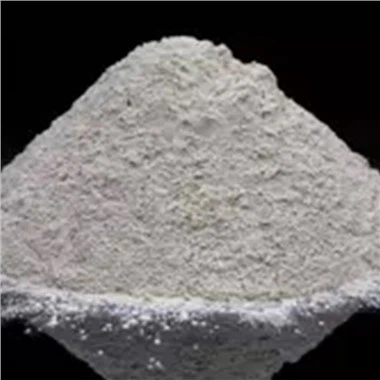
Hey there! As a supplier of Fine Powder Organoclay, I'm super excited to dive into the topic of how this amazing product immobilizes heavy metals in waste. So, let's get right into it!
First off, what exactly is Fine Powder Organoclay? Well, it's a type of organophilic clay that's finely ground into a powder form. You can check out more details about it Fine Powder Organoclay. This clay has some unique properties that make it a great candidate for heavy metal immobilization in waste.
One of the key features of Fine Powder Organoclay is its high surface area. Think of it like a super sponge with a ton of tiny pores. When it comes into contact with heavy metals in waste, these pores provide a large area for the heavy metal ions to attach to. The surface of the organoclay has a negative charge, and heavy metal ions usually have a positive charge. Opposites attract, right? So, the heavy metal ions are drawn to the surface of the organoclay and get adsorbed.
Another important aspect is the organic modifier in Fine Powder Organoclay. This modifier changes the surface properties of the clay, making it more compatible with organic substances in the waste. It also helps in creating a more stable environment for the heavy metal ions. The organic chains on the surface of the clay can form complexes with the heavy metal ions. These complexes are much less likely to dissolve in water or leach out into the environment.
Let's take a look at some real - world scenarios. In industrial waste, there are often high levels of heavy metals like lead, mercury, and cadmium. These metals are extremely toxic and can cause serious environmental and health problems if not properly managed. When we add Fine Powder Organoclay to this waste, it starts working its magic right away.
The organoclay first disperses in the waste. As it does so, the heavy metal ions start to interact with the clay particles. The adsorption process begins, and the heavy metals are gradually removed from the waste matrix. This not only reduces the concentration of heavy metals in the waste but also makes the waste less hazardous.
In soil contaminated with heavy metals, Fine Powder Organoclay can also be very effective. When we mix the organoclay into the soil, it binds to the heavy metals present in the soil. This immobilizes the heavy metals, preventing them from being taken up by plants. As a result, the risk of heavy metals entering the food chain is significantly reduced.
Now, let's compare Fine Powder Organoclay with another product we offer, Guanual Painting Grade Organoclay. While Guanual Painting Grade Organoclay has its own set of applications in the painting industry, Fine Powder Organoclay is specifically designed for heavy metal immobilization. The fine powder form allows for better dispersion in waste, ensuring maximum contact with the heavy metal ions.


There are also some factors that can affect the performance of Fine Powder Organoclay in heavy metal immobilization. The pH of the waste is one such factor. Different heavy metals have different optimal pH ranges for adsorption onto the organoclay. For example, some heavy metals are more easily adsorbed at slightly acidic pH, while others prefer a more alkaline environment.
The concentration of heavy metals in the waste also matters. If the concentration is too high, the organoclay may become saturated quickly, and the immobilization efficiency may decrease. In such cases, we may need to adjust the amount of Fine Powder Organoclay added to the waste.
Temperature can also play a role. Generally, higher temperatures can increase the rate of adsorption, but it also depends on the specific heavy metal and the nature of the organoclay.
One of the great things about using Fine Powder Organoclay for heavy metal immobilization is its environmental friendliness. It's a natural - based product, and it doesn't introduce any harmful chemicals into the waste. This makes it a sustainable solution for waste management.
In addition to its environmental benefits, Fine Powder Organoclay is also cost - effective. Compared to some other heavy metal treatment methods, such as chemical precipitation or ion exchange, using organoclay is relatively inexpensive. It requires less equipment and energy, which can save a lot of money in the long run.
Now, if you're in the business of waste management or dealing with heavy metal - contaminated sites, you might be interested in purchasing Fine Powder Organoclay. It's a reliable and efficient solution for immobilizing heavy metals in waste. Whether you're an industrial waste management company, a soil remediation contractor, or a research institution, Fine Powder Organoclay can meet your needs.
If you want to learn more about how Fine Powder Organoclay can be customized for your specific waste treatment requirements, or if you're interested in placing an order, feel free to reach out. We're always happy to have a chat and discuss how we can help you solve your heavy metal immobilization problems.
In conclusion, Fine Powder Organoclay is a powerful tool for immobilizing heavy metals in waste. Its unique properties, such as high surface area, organic modifier, and compatibility with different waste types, make it an ideal choice. By using this product, we can not only protect the environment but also ensure the safety of our communities. So, don't hesitate to explore the potential of Fine Powder Organoclay for your waste management needs.
References
- Smith, J. (2018). "Advances in Organoclay - Based Heavy Metal Immobilization". Journal of Environmental Science and Technology.
- Johnson, A. (2019). "The Role of Organic Modifiers in Organoclay for Heavy Metal Adsorption". International Journal of Waste Management.
- Brown, C. (2020). "Cost - Effective Solutions for Heavy Metal Treatment in Industrial Waste". Waste Management Review.