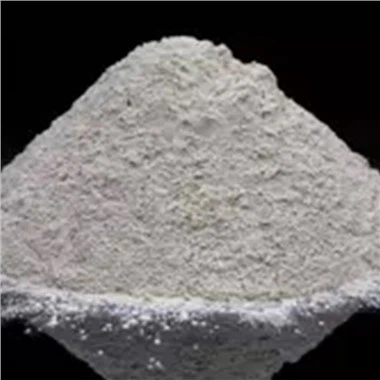
Hey there! As a supplier of Carboxymethyl Cellulose (CMC) Gel, I've seen firsthand how this amazing substance can have a big impact on the gelation process of other materials. In this blog, I'm gonna break down how CMC Gel works its magic and affects the gelation of different substances.
What's Carboxymethyl Cellulose Gel?
First off, let's get to know CMC Gel a bit better. CMC is a cellulose derivative that's made by chemically modifying natural cellulose. When it's turned into a gel, it becomes a super useful product with a bunch of unique properties. It's water - soluble, non - toxic, and has excellent thickening, stabilizing, and emulsifying abilities. That's why it's used in so many industries, from food and cosmetics to detergents. You can learn more about its applications in cosmetics Carboxymethyl Cellulose in Cosmetics and skin care Carboxymethyl Cellulose in Skin Care.
How CMC Gel Affects Gelation
In the Food Industry
In the food world, gelation is a crucial process. It's what gives jellies their firmness, ice creams their smooth texture, and sauces their right consistency. When CMC Gel is added to food systems, it can significantly influence the gelation process.


One of the main ways CMC Gel affects gelation is through its ability to form a network structure. When CMC molecules are dispersed in water, they start to interact with each other and with water molecules. As the concentration of CMC Gel increases, these interactions become stronger, and a three - dimensional network is formed. This network can trap other substances, like flavorings, colors, or particles, within its structure.
For example, in a fruit jelly, CMC Gel can work with other gelling agents, such as pectin or gelatin. It can enhance the gel strength and improve the texture of the jelly. The CMC network helps to hold the fruit pieces in place and prevents them from settling at the bottom. It also gives the jelly a more elastic and smooth mouthfeel.
Another aspect is its effect on the gelation temperature. CMC Gel can lower the gelation temperature of some substances. This means that the gel can form at a lower temperature, which can be beneficial in food processing. It can save energy and also prevent the degradation of heat - sensitive ingredients.
In the Cosmetics Industry
Cosmetics rely heavily on gelation to achieve the right consistency and stability. CMC Gel is a popular ingredient in creams, lotions, and gels. It affects the gelation process in cosmetics in several ways.
In emulsions, which are mixtures of oil and water, CMC Gel acts as an emulsifier. It helps to stabilize the emulsion by preventing the oil droplets from coalescing. During the gelation process, CMC molecules adsorb at the oil - water interface, forming a protective layer around the oil droplets. This layer reduces the surface tension between the oil and water phases and keeps the emulsion stable over time.
For example, in a moisturizing lotion, CMC Gel can help to create a smooth and creamy texture. It can also improve the spreadability of the lotion on the skin. The gelation of the CMC - containing lotion gives it a non - greasy feel and helps the active ingredients to be released slowly onto the skin.
Moreover, CMC Gel can interact with other polymers in cosmetics formulations. It can form interpolymer complexes with polymers like carbomers. These complexes can enhance the gel strength and the rheological properties of the cosmetic product. This leads to better product performance, such as improved viscosity control and longer shelf life.
In the Detergent Industry
In detergents, gelation can play a role in product stability and performance. CMC Gel is often used in liquid detergents to control the viscosity and prevent phase separation.
When added to a detergent solution, CMC Gel can form a gel - like structure. This structure helps to keep the different components of the detergent, such as surfactants, enzymes, and builders, evenly dispersed. It prevents the settling of solid particles and the separation of different liquid phases.
For example, in a laundry detergent, CMC Gel can improve the suspension of soil - removing particles. It can also enhance the cleaning power of the detergent by helping the surfactants to better interact with the dirt on the clothes. You can find more information about its use in detergents Carboxymethyl Cellulose in Detergent.
Factors Affecting the Impact of CMC Gel on Gelation
Concentration
The concentration of CMC Gel is a key factor. Generally, as the concentration of CMC Gel increases, the gel strength also increases. However, there's an optimal concentration range. If the concentration is too low, the gel may not form properly or may have weak mechanical properties. On the other hand, if the concentration is too high, the gel may become too viscous, which can cause problems in processing and application.
pH
The pH of the system can also affect the gelation process. CMC Gel is more stable in a slightly acidic to neutral pH range. At extreme pH values, the CMC molecules may undergo chemical changes, such as hydrolysis. This can affect the gelation ability of CMC Gel and the properties of the resulting gel.
For example, in a cosmetic product, if the pH is too high or too low, the CMC - based gel may lose its stability and become runny. So, it's important to control the pH in the formulation to ensure the proper gelation of CMC Gel.
Temperature
Temperature has a significant impact on the gelation of CMC Gel and other substances. At higher temperatures, the CMC molecules have more kinetic energy, which can disrupt the intermolecular interactions. This can lead to a decrease in gel strength.
However, during the cooling process, the gelation can occur more rapidly. The temperature at which the gel forms is called the gelation temperature. As mentioned before, CMC Gel can affect the gelation temperature of other substances. It can either lower or raise the gelation temperature, depending on the system and the other components present.
Why Choose Our CMC Gel?
As a supplier, we offer high - quality CMC Gel that can meet your specific requirements. Our CMC Gel is produced using advanced manufacturing processes, which ensure its purity and consistent quality.
We have a wide range of CMC Gel products with different degrees of substitution and molecular weights. This allows you to choose the right product for your application. Whether you need a CMC Gel for a soft and elastic gel in food or a highly viscous gel in a detergent, we have the solution.
Our technical support team is always ready to help you. We can provide you with detailed information on how to use our CMC Gel in your formulations. We can also assist you in optimizing your gelation process to achieve the best results.
If you're interested in learning more about our Carboxymethyl Cellulose Gel or want to discuss your procurement needs, feel free to reach out. We're looking forward to starting a great business relationship with you.
References
- Dickinson, E. (2009). Food Emulsions and Foams: Stabilization by Particles. Current Opinion in Colloid & Interface Science, 14(1 - 2), 40 - 49.
- Glicksman, M. (1982). Gum Technology in the Food Industry. Academic Press.
- Rosen, M. J., & Kunjappu, J. T. (2012). Surfactants and Interfacial Phenomena. Wiley.