Hey there! As a supplier of Pating Grade Organoclay, I often get asked whether it can be used in adhesive formulations. Well, let's dive into this topic and find out.


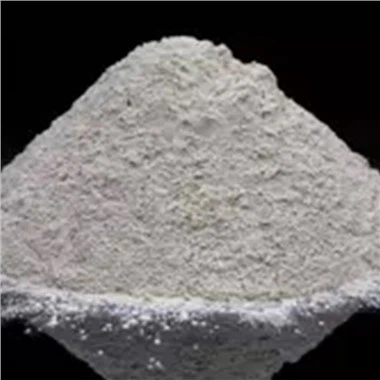
First off, let me give you a quick rundown of what Pating Grade Organoclay is. It's a type of organophilic clay that has been modified to have better compatibility with organic materials. There are different types of Pating Grade Organoclay, like the Fine Powder Organoclay and the Guanual Painting Grade Organoclay. These clays are known for their unique properties, which make them potentially useful in a variety of applications.
When it comes to adhesives, the performance requirements are pretty high. Adhesives need to have good bonding strength, be able to withstand different environmental conditions, and have appropriate viscosity for application. So, can Pating Grade Organoclay help meet these requirements?
One of the key properties of Pating Grade Organoclay is its ability to increase the viscosity of organic systems. In adhesive formulations, viscosity control is crucial. If the adhesive is too thin, it may flow off the surface before it can bond properly. On the other hand, if it's too thick, it can be difficult to apply evenly. By adding Pating Grade Organoclay to the adhesive, we can adjust its viscosity to an optimal level. This allows for better application and ensures that the adhesive stays in place during the bonding process.
Another important aspect is the thixotropic behavior of Pating Grade Organoclay. Thixotropy means that the material becomes less viscous when it's subjected to shear stress (like when you're applying the adhesive) and then returns to its higher viscosity state when the stress is removed. This property is really useful in adhesives. When you're spreading the adhesive, the lower viscosity allows for easy application. But once it's in place, the higher viscosity helps prevent it from dripping or sagging, which is especially important for vertical or overhead applications.
In terms of bonding strength, Pating Grade Organoclay can also play a role. The clay particles can interact with the adhesive matrix and the surfaces being bonded. This interaction can enhance the mechanical interlocking between the adhesive and the substrate, leading to improved bonding strength. Additionally, the clay can help distribute stress more evenly across the bond area, reducing the likelihood of stress concentrations that could lead to bond failure.
Now, let's talk about the environmental resistance of adhesives with Pating Grade Organoclay. Adhesives are often exposed to different environmental factors such as moisture, heat, and chemicals. Pating Grade Organoclay can act as a barrier to some extent. It can help reduce the penetration of moisture into the adhesive, which is important because moisture can weaken the bond over time. In high - temperature applications, the clay can also help improve the thermal stability of the adhesive, preventing it from degrading too quickly.
However, like with any material, there are also some considerations when using Pating Grade Organoclay in adhesive formulations. One is the dispersion of the clay in the adhesive. The clay needs to be well - dispersed to achieve its full potential. If it's not dispersed properly, it can lead to clumping, which can affect the viscosity and performance of the adhesive. Another consideration is the compatibility with other components in the adhesive formulation. Some additives or resins may interact with the clay in unexpected ways, so it's important to test the compatibility before large - scale production.
To sum it up, Pating Grade Organoclay has a lot of potential to be used in adhesive formulations. Its ability to control viscosity, provide thixotropic behavior, enhance bonding strength, and improve environmental resistance makes it a valuable additive. But it's also important to be aware of the challenges and conduct proper testing to ensure optimal performance.
If you're in the business of adhesives and are interested in exploring the use of Pating Grade Organoclay in your formulations, I'd love to have a chat with you. Whether you have specific questions about the product or want to discuss potential applications, I'm here to help. Drop me a line, and we can start a conversation about how Pating Grade Organoclay can take your adhesive products to the next level.
References
- "Handbook of Adhesive Technology", Second Edition, edited by A. Pizzi and K. L. Mittal
- "Organoclays: Preparation, Properties, and Applications", published by The Clay Minerals Society