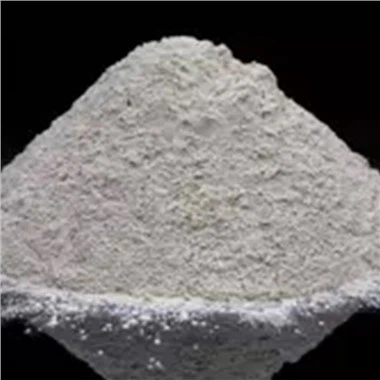
As a trusted supplier of Oil Drilling Grade Organoclay, I've often been asked about the viability of using our product in deep - well oil drilling. In this blog, I'll delve into the characteristics of Oil Drilling Grade Organoclay and explore its potential applications in deep - well oil drilling operations.
Understanding Oil Drilling Grade Organoclay
Oil Drilling Grade Organoclay is a specially treated clay material that has unique rheological properties. It is designed to be used in oil - based drilling fluids, which are crucial for the success of oil drilling operations. The organoclay is typically derived from bentonite clay, which is modified through a process that replaces the inorganic cations in the clay structure with organic cations. This modification gives the organoclay its hydrophobic nature, allowing it to disperse well in oil - based systems.
The main functions of Oil Drilling Grade Organoclay in drilling fluids include enhancing viscosity, providing suspension for cuttings, and improving the overall stability of the fluid. These properties are essential for maintaining the efficiency and safety of the drilling process.

Challenges in Deep - Well Oil Drilling
Deep - well oil drilling presents a set of unique challenges compared to shallower drilling operations. The extreme conditions in deep wells, such as high temperatures, high pressures, and complex geological formations, require drilling fluids with exceptional performance characteristics.
High temperatures can cause the breakdown of polymers and other additives in the drilling fluid, leading to a loss of viscosity and suspension properties. High pressures can also affect the density and rheology of the fluid, potentially causing wellbore instability or other operational problems. Additionally, deep - well formations may contain hard rock, shale, or other challenging materials that require a drilling fluid capable of effective cuttings removal and wellbore support.
Can Oil Drilling Grade Organoclay Meet the Challenges?
Temperature Resistance
One of the key concerns in deep - well drilling is the ability of the drilling fluid to maintain its properties at high temperatures. Oil Drilling Grade Organoclay has shown good thermal stability in many applications. The organic modification of the clay structure provides a certain degree of protection against thermal degradation. However, the specific temperature resistance of the organoclay depends on the type of organic treatment and the base oil used in the drilling fluid.
Some advanced formulations of Organoclay with Synthetic - oil Base Fluids are designed to withstand higher temperatures. Synthetic oils often have better thermal stability than traditional diesel - based oils, and when combined with the right organoclay, they can provide a drilling fluid that remains effective at temperatures up to several hundred degrees Celsius.
Pressure Resistance
High pressures in deep wells can compress the drilling fluid and change its rheological properties. Oil Drilling Grade Organoclay can help to counteract these effects by providing a stable structure to the fluid. The organoclay particles form a network within the oil - based fluid, which can resist the compressive forces caused by high pressure. This network structure helps to maintain the viscosity and suspension properties of the fluid, ensuring that cuttings are effectively transported to the surface and the wellbore remains stable.
Cuttings Suspension and Removal
In deep - well drilling, effective cuttings suspension and removal are crucial for preventing blockages and maintaining the integrity of the wellbore. Oil Drilling Grade Organoclay's ability to enhance the viscosity of the drilling fluid is essential for this purpose. The increased viscosity allows the fluid to carry the cuttings from the bottom of the well to the surface.
Moreover, the organoclay can also help to prevent the settling of cuttings during periods of low - circulation or when the drilling operation is paused. This is particularly important in deep - well drilling, where any disruption in cuttings removal can lead to serious problems, such as stuck pipe or wellbore collapse.
Case Studies and Real - World Applications
There have been numerous successful applications of Oil Drilling Grade Organoclay in deep - well oil drilling projects. For example, in a deep - water drilling project in the Gulf of Mexico, a drilling fluid formulated with Organic Bentonite with Primarily Diesel - based Drilling Fluids was used. Despite the high temperatures and pressures at the drilling depth of over 5000 meters, the drilling fluid maintained its viscosity and suspension properties throughout the operation. This allowed for efficient cuttings removal and a smooth drilling process, reducing the risk of wellbore instability and other operational issues.
In another project in the North Sea, a modified form of Modified Bentonite with Oil Based Drilling was used in a deep - well drilling operation. The drilling fluid containing this organoclay was able to withstand the harsh conditions of the deep - well environment, including high - temperature and high - pressure zones, as well as challenging geological formations. The project was completed successfully, with minimal downtime due to drilling fluid - related problems.
Considerations for Using Oil Drilling Grade Organoclay in Deep - Well Drilling
While Oil Drilling Grade Organoclay has shown great potential in deep - well oil drilling, there are some considerations that need to be taken into account.
Compatibility with Other Additives
Drilling fluids often contain a variety of additives, such as polymers, surfactants, and weighting agents. It is important to ensure that the Oil Drilling Grade Organoclay is compatible with these other additives. Incompatibility can lead to flocculation, precipitation, or other chemical reactions that can degrade the performance of the drilling fluid.
Environmental Impact
As the oil and gas industry becomes more environmentally conscious, the environmental impact of drilling fluids is an important consideration. Some organoclays may be derived from non - renewable resources or may contain chemicals that are harmful to the environment. When using Oil Drilling Grade Organoclay in deep - well drilling, it is necessary to choose products that meet environmental regulations and have a minimal impact on the surrounding ecosystem.
Conclusion
In conclusion, Oil Drilling Grade Organoclay can be effectively used in deep - well oil drilling. Its unique rheological properties, including viscosity enhancement, cuttings suspension, and stability under high - temperature and high - pressure conditions, make it a valuable component of drilling fluids for deep - well operations. Through careful formulation and selection of the right organoclay product, such as those mentioned in the links above, drilling companies can overcome the challenges associated with deep - well drilling and achieve efficient and safe operations.
If you are involved in deep - well oil drilling or are looking for high - quality Oil Drilling Grade Organoclay for your drilling projects, I encourage you to contact us to discuss your specific requirements. Our team of experts can provide you with detailed information and customized solutions to meet your needs.
References
- Smith, J. (2018). Rheological Properties of Oil - Based Drilling Fluids with Organoclay Additives. Journal of Petroleum Science and Engineering, 164, 234 - 241.
- Johnson, R. (2019). High - Temperature and High - Pressure Drilling Fluid Design for Deep - Well Applications. International Journal of Drilling Technology, 22(3), 45 - 53.
- Brown, A. (2020). Case Studies of Successful Deep - Well Drilling with Organoclay - Based Drilling Fluids. Drilling Engineering Review, 30(2), 67 - 74.