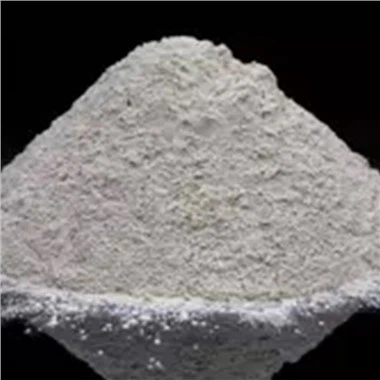
Hey there! As a supplier of Fine Powder Organoclay, I've been getting a lot of questions lately about whether this nifty stuff can be used in the adhesive industry. Well, let's dive right in and explore this topic together.
First off, what exactly is Fine Powder Organoclay? It's a type of organophilic clay that has been modified to have an affinity for organic substances. This unique property makes it a versatile material with a wide range of applications. You can find more detailed information about Fine Powder Organoclay on our website.
Now, let's talk about the adhesive industry. Adhesives are used in countless products and industries, from construction and automotive to packaging and woodworking. The key requirements for adhesives often include good viscosity control, thixotropy (the ability to change viscosity under stress), and stability. And this is where Fine Powder Organoclay can really shine.
One of the main benefits of using Fine Powder Organoclay in adhesives is its ability to improve viscosity. When added to an adhesive formulation, the clay particles can form a three - dimensional network structure. This network helps to thicken the adhesive, which is especially useful for applications where you need to prevent the adhesive from dripping or sagging. For example, in construction adhesives used for bonding heavy materials, a higher viscosity is crucial to ensure that the adhesive stays in place until it dries.
Thixotropy is another important property. Adhesives often need to be easily spreadable during application but then hold their shape once applied. Fine Powder Organoclay can provide this thixotropic behavior. When shear stress is applied (like when you're spreading the adhesive with a brush or a trowel), the clay network breaks down, reducing the viscosity and making the adhesive flow more easily. Once the stress is removed, the network reforms, increasing the viscosity again and helping the adhesive to hold its shape.
In addition to viscosity and thixotropy, Fine Powder Organoclay can also enhance the stability of adhesives. It can prevent the separation of different components in the adhesive over time, which is known as phase separation. This is particularly important for multi - component adhesives, where maintaining a homogeneous mixture is essential for consistent performance.
Let's take a look at some specific types of adhesives where Fine Powder Organoclay can be beneficial.


In epoxy adhesives, which are known for their high strength and chemical resistance, the addition of Fine Powder Organoclay can improve the handling properties. Epoxies can be quite runny in their uncured state, and the clay can help to thicken them, making them easier to apply. It can also enhance the adhesion strength by improving the wetting of the substrate surface.
Polyurethane adhesives are widely used in the automotive and furniture industries. These adhesives need to have good flexibility and durability. Fine Powder Organoclay can contribute to these properties by improving the internal structure of the adhesive. It can also help to reduce the shrinkage of the adhesive during curing, which can prevent cracking and improve the overall performance of the bonded joint.
Acrylic adhesives are popular for their fast - curing and clear appearance. However, they can sometimes have issues with sagging. By adding Fine Powder Organoclay, the sag resistance of acrylic adhesives can be significantly improved, allowing for more precise application.
Now, you might be wondering about the compatibility of Fine Powder Organoclay with different adhesive systems. Generally, it has good compatibility with a wide range of polymers used in adhesives, including epoxies, polyurethanes, acrylics, and rubber - based adhesives. But like any additive, it's important to conduct some tests to ensure optimal performance in your specific adhesive formulation.
Another aspect to consider is the dosage of Fine Powder Organoclay. The amount of clay you add will depend on the desired properties of the adhesive. A small amount might be sufficient to improve thixotropy slightly, while a higher dosage may be needed to achieve a significant increase in viscosity. It's usually a good idea to start with a small amount and then gradually increase it while monitoring the properties of the adhesive.
There are also some other potential applications in the adhesive industry related to Fine Powder Organoclay. For example, in some cases, it can be used as a filler to reduce the cost of the adhesive without sacrificing too much performance. It can also improve the abrasion resistance of the adhesive, which is important for applications where the bonded joint may be subject to wear and tear.
If you're in the market for a Guanual Painting Grade Organoclay, which also has some similar properties and can be used in certain adhesive applications, our website has all the details you need.
So, to answer the question “Can Fine Powder Organoclay be used in the adhesive industry?” the answer is a resounding yes! It offers a range of benefits in terms of viscosity control, thixotropy, stability, and other performance - enhancing properties. Whether you're a small - scale adhesive manufacturer or a large - scale industrial user, Fine Powder Organoclay can be a valuable addition to your adhesive formulations.
If you're interested in exploring how Fine Powder Organoclay can improve your adhesive products, I'd love to have a chat with you. We can discuss your specific requirements and see how our product can fit into your manufacturing process. Don't hesitate to reach out and start a conversation about potential procurement.
References:
- "Handbook of Adhesive Technology" by Skeist, I.
- "Polymer - Clay Nanocomposites" by Alexandre, M. and Dubois, P.
- Various industry research papers on the application of organoclay in adhesives.