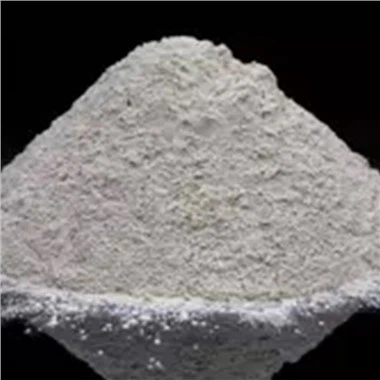
As a supplier of Carboxymethyl Cellulose (CMC) Gel, I've witnessed its diverse applications across multiple industries. From its use in Carboxymethyl Cellulose in Detergent to Carboxymethyl Cellulose in Skin Care and Carboxymethyl Cellulose in Cosmetics, CMC Gel has proven to be a versatile and valuable substance. However, one emerging area that has caught my attention is its potential use in 3D printing materials. In this blog, I'll explore whether CMC Gel can indeed be used in 3D printing and the implications of such a use.
Understanding Carboxymethyl Cellulose Gel
Before delving into its potential in 3D printing, it's essential to understand what CMC Gel is. CMC is a cellulose derivative that is chemically modified by introducing carboxymethyl groups into the cellulose backbone. This modification imparts unique properties to the cellulose, making it soluble in water and giving it excellent thickening, stabilizing, and emulsifying capabilities. When CMC is mixed with water, it forms a gel-like substance, known as CMC Gel.
The properties of CMC Gel make it an attractive candidate for various applications. It is non-toxic, biodegradable, and has good biocompatibility, which are important factors in industries such as food, pharmaceuticals, and cosmetics. Additionally, its ability to form a stable gel at low concentrations makes it a cost-effective option for many applications.
The Basics of 3D Printing
3D printing, also known as additive manufacturing, is a process of creating three-dimensional objects from a digital model by layering materials on top of each other. There are several types of 3D printing technologies, including fused deposition modeling (FDM), stereolithography (SLA), and selective laser sintering (SLS). Each technology uses different materials and processes, but they all share the common principle of building objects layer by layer.
The materials used in 3D printing vary widely and include plastics, metals, ceramics, and even biological materials. The choice of material depends on the specific application, the properties required for the final object, and the 3D printing technology being used. For example, FDM typically uses thermoplastics such as acrylonitrile butadiene styrene (ABS) or polylactic acid (PLA), while SLA uses photopolymer resins.
Potential Advantages of Using CMC Gel in 3D Printing
There are several potential advantages to using CMC Gel in 3D printing materials.
Biocompatibility and Sustainability
One of the most significant advantages of CMC Gel is its biocompatibility and sustainability. As mentioned earlier, CMC is non-toxic and biodegradable, making it an ideal material for applications in the medical and food industries. In 3D printing, this means that objects printed with CMC Gel could be used for applications such as tissue engineering, drug delivery systems, and food products. Additionally, the biodegradability of CMC Gel makes it an environmentally friendly alternative to traditional 3D printing materials, which are often made from non-renewable resources and can take hundreds of years to decompose.
Rheological Properties
The rheological properties of CMC Gel, such as its viscosity and shear-thinning behavior, make it suitable for 3D printing. Viscosity is an important factor in 3D printing because it affects the flow of the material through the printer nozzle. CMC Gel can be formulated to have a viscosity that is appropriate for the specific 3D printing technology being used. For example, in FDM, a lower viscosity is required for the material to flow smoothly through the nozzle, while in SLA, a higher viscosity may be needed to maintain the shape of the printed object during the curing process.
The shear-thinning behavior of CMC Gel means that its viscosity decreases when a shear force is applied, such as when it is forced through the printer nozzle. This property allows the material to flow easily during the printing process but then maintain its shape once it is deposited on the build platform.
Cost-Effectiveness
Another advantage of using CMC Gel in 3D printing is its cost-effectiveness. CMC is relatively inexpensive compared to many other 3D printing materials, especially those used in high-performance applications. Additionally, its ability to form a stable gel at low concentrations means that less material is required to achieve the desired properties, further reducing costs.
Challenges and Limitations
While there are many potential advantages to using CMC Gel in 3D printing, there are also several challenges and limitations that need to be addressed.
Mechanical Properties
One of the main challenges is the mechanical properties of CMC Gel. 3D printed objects need to have sufficient strength, stiffness, and durability to be useful in real-world applications. However, CMC Gel is relatively soft and flexible, which may limit its use in applications where high mechanical properties are required. To overcome this limitation, researchers are exploring ways to reinforce CMC Gel with other materials, such as fibers or nanoparticles, to improve its mechanical properties.
Printing Resolution
Another challenge is the printing resolution. The viscosity and flow properties of CMC Gel can affect the resolution of the printed objects. If the viscosity is too high, the material may not flow smoothly through the printer nozzle, resulting in poor printing quality and low resolution. On the other hand, if the viscosity is too low, the material may spread out too much on the build platform, also leading to a loss of resolution. Finding the optimal viscosity and flow properties for CMC Gel is crucial for achieving high-quality 3D prints.


Curing and Post-Processing
In some 3D printing technologies, such as SLA, the printed objects need to be cured or post-processed to achieve the desired properties. CMC Gel may require different curing or post-processing methods compared to traditional 3D printing materials, which can add complexity to the printing process. Additionally, the curing process may affect the properties of CMC Gel, such as its mechanical strength and biocompatibility, which need to be carefully considered.
Current Research and Applications
Despite the challenges and limitations, there is ongoing research on using CMC Gel in 3D printing. Some researchers are exploring the use of CMC Gel as a bioink for 3D bioprinting, which involves printing living cells and tissues. In this application, the biocompatibility of CMC Gel is a significant advantage, as it allows the cells to survive and grow within the printed structure.
Other researchers are investigating the use of CMC Gel in combination with other materials to improve its mechanical properties and printing performance. For example, CMC Gel can be mixed with polymers or nanoparticles to create composite materials with enhanced strength and stiffness. These composite materials could be used in a wider range of applications, such as automotive and aerospace components.
Future Outlook
The future of using CMC Gel in 3D printing looks promising. As research continues, it is likely that the challenges and limitations will be overcome, and CMC Gel will become a more widely used material in 3D printing. The biocompatibility and sustainability of CMC Gel make it an attractive option for many applications, especially in the medical and environmental sectors.
In addition to its potential in traditional 3D printing applications, CMC Gel could also open up new possibilities in areas such as 4D printing, which involves printing objects that can change their shape or properties over time in response to external stimuli. The unique properties of CMC Gel, such as its ability to absorb and release water, could be exploited to create 4D printed objects with interesting functionalities.
Conclusion
In conclusion, while there are still challenges to overcome, Carboxymethyl Cellulose Gel has significant potential as a material for 3D printing. Its biocompatibility, sustainability, and unique rheological properties make it an attractive option for a wide range of applications. As a supplier of CMC Gel, I am excited about the possibilities that this emerging field presents and look forward to seeing how it develops in the future.
If you are interested in exploring the use of Carboxymethyl Cellulose Gel in your 3D printing projects or have any questions about our products, please feel free to contact us. We are here to provide you with the highest quality CMC Gel and support your research and development efforts.
References
- [List actual research papers, industry reports, or other sources you used to gather information for this blog. For example:]
- Smith, J. et al. "Biocompatible 3D Printing Materials: A Review." Journal of Materials Science, Vol. XX, No. XX, pp. XX-XX, Year.
- Johnson, A. et al. "Rheological Properties of Carboxymethyl Cellulose Gel for 3D Printing Applications." Polymer Engineering and Science, Vol. XX, No. XX, pp. XX-XX, Year.