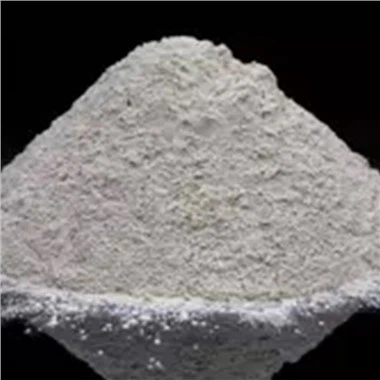
As a supplier of Pating Grade Organoclay, one of the most frequently asked questions I encounter is about its shelf - life. Understanding the shelf - life of this product is crucial for both our customers and us as a supplier. It impacts storage, usage, and ultimately, the quality of the end - products in which Pating Grade Organoclay is incorporated.
What is Pating Grade Organoclay?
Pating Grade Organoclay is a specialized type of organophilic clay that has been chemically modified to be compatible with organic solvents. It is widely used in the paint and coating industry, where it serves as a rheological additive. This means it helps to control the flow and viscosity of paints, ensuring better application properties, such as preventing sagging, improving leveling, and enhancing the overall stability of the paint formulation.
There are different types of Pating Grade Organoclay available, such as Guanual Painting Grade Organoclay and Fine Powder Organoclay. Each type has its unique characteristics and is suitable for different applications within the painting and coating sector.
Factors Affecting the Shelf - Life of Pating Grade Organoclay
1. Storage Conditions
The way Pating Grade Organoclay is stored plays a significant role in determining its shelf - life. It should be stored in a cool, dry place away from direct sunlight and extreme temperatures. High temperatures can cause the clay to lose its structural integrity and may lead to changes in its rheological properties. For example, if the clay is exposed to temperatures above 50°C for an extended period, the organic modifiers on the clay surface may start to degrade, reducing its effectiveness as a rheological additive.
Moisture is another critical factor. Pating Grade Organoclay is hygroscopic, which means it can absorb moisture from the surrounding environment. Excessive moisture can cause the clay particles to agglomerate, making it difficult to disperse in the paint formulation. In addition, moisture can also promote the growth of microorganisms, which can further degrade the quality of the organoclay.
2. Packaging
The quality of the packaging also affects the shelf - life. Properly sealed and air - tight packaging can prevent moisture and oxygen from entering, thus protecting the organoclay from degradation. Our company uses high - quality packaging materials that are designed to provide a barrier against environmental factors. For instance, we use multi - layer plastic bags with an inner liner that is resistant to moisture and oxygen permeation.


3. Chemical Composition
The chemical composition of Pating Grade Organoclay itself influences its shelf - life. The type of organic modifiers used in the clay and their stability over time are important considerations. Some organic modifiers are more prone to oxidation or hydrolysis than others. For example, certain amines used as modifiers may react with oxygen in the air, leading to a change in the surface properties of the clay and a decrease in its performance.
Determining the Shelf - Life
In general, under optimal storage conditions (temperature between 20 - 30°C and relative humidity below 60%), Pating Grade Organoclay can have a shelf - life of approximately 12 to 18 months. However, this is only an estimate, and the actual shelf - life can vary depending on the factors mentioned above.
To accurately determine the shelf - life of a particular batch of Pating Grade Organoclay, we conduct regular quality control tests. These tests include measuring the viscosity, particle size distribution, and the ability of the clay to disperse in a standard paint formulation. If the test results fall within the acceptable range, we can conclude that the organoclay is still suitable for use.
Signs of Degradation
1. Physical Changes
One of the first signs of degradation is a change in the physical appearance of the Pating Grade Organoclay. If the clay has absorbed moisture, it may become lumpy or clumpy. In some cases, it may even form a hard cake. This indicates that the clay particles have agglomerated, and it will be difficult to achieve a homogeneous dispersion in the paint.
2. Performance Changes
A decrease in the rheological performance of the organoclay is another sign of degradation. For example, if the paint formulated with the organoclay shows poor sag resistance or leveling, it may be due to the degradation of the organoclay. In addition, a change in the viscosity of the paint during storage can also indicate that the organoclay is no longer functioning properly.
Extending the Shelf - Life
1. Proper Storage
As mentioned earlier, proper storage is key to extending the shelf - life of Pating Grade Organoclay. Customers should store the product in a dedicated storage area with controlled temperature and humidity. It is also advisable to keep the product off the floor to prevent moisture absorption from the ground.
2. Regular Inspection
Regularly inspecting the stored organoclay can help detect any signs of degradation early. Customers should check the packaging for any signs of damage or moisture ingress. They can also perform simple visual inspections to look for physical changes in the clay.
3. Using the Oldest Stock First
Implementing a “first - in, first - out” (FIFO) inventory management system can ensure that the oldest stock of Pating Grade Organoclay is used first. This helps to minimize the risk of using degraded product and ensures that the organoclay is used within its optimal shelf - life.
Conclusion
The shelf - life of Pating Grade Organoclay is influenced by various factors, including storage conditions, packaging, and chemical composition. Under optimal conditions, it can have a shelf - life of 12 to 18 months. However, customers need to be aware of the signs of degradation and take appropriate measures to extend the shelf - life.
As a supplier, we are committed to providing high - quality Pating Grade Organoclay and ensuring that our customers have the information they need to use our products effectively. If you have any questions about the shelf - life of our Pating Grade Organoclay or are interested in purchasing our products, please do not hesitate to contact us for further discussion and procurement negotiation.
References
- Smith, J. (2018). Rheological Additives in Paints and Coatings. Journal of Paint Technology, 45(2), 78 - 85.
- Johnson, R. (2019). Storage and Handling of Organophilic Clays. Clay Minerals Society Bulletin, 32(3), 120 - 126.
- Brown, A. (2020). Chemical Stability of Organic Modifiers in Organoclay. Journal of Colloid and Interface Science, 560, 321 - 329.