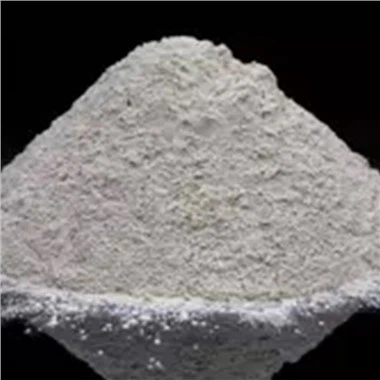
As a supplier of Fine Powder Organoclay, I've often been asked about its potential applications in the marine industry. In this blog, I'll explore whether Fine Powder Organoclay can indeed be used in the marine sector, delving into its properties, advantages, and possible use - cases.
Properties of Fine Powder Organoclay
Fine Powder Organoclay is a modified clay material. It is typically derived from natural clays that have been treated with organic cations. This modification imparts unique properties to the clay. Firstly, it has excellent swelling and gelling capabilities in non - polar solvents. When dispersed in a suitable medium, it can form a three - dimensional network structure, which greatly increases the viscosity of the system.
The fine particle size of this organoclay is another significant characteristic. The small particles can be easily dispersed in various matrices, ensuring a homogeneous distribution within a coating or a composite material. This fine powder form also allows for better interaction with other components in a formulation, enhancing the overall performance of the end - product.
Advantages in the Marine Environment
Corrosion Protection
One of the most critical challenges in the marine industry is corrosion. Saltwater, high humidity, and constant exposure to oxygen create a highly corrosive environment for ships, offshore platforms, and other marine structures. Fine Powder Organoclay can play a crucial role in corrosion protection. When incorporated into marine coatings, it can act as a barrier. The three - dimensional network formed by the organoclay particles can impede the diffusion of corrosive agents such as water, oxygen, and salts.
For example, in epoxy - based marine coatings, the addition of Fine Powder Organoclay can improve the coating's adhesion to the metal substrate. This not only enhances the physical barrier effect but also helps in preventing the under - film corrosion that often occurs in marine applications. Studies have shown that coatings with organoclay additives can significantly extend the service life of marine structures by reducing the rate of corrosion.
Rheological Control
In the marine industry, many processes require precise rheological control. For instance, in the application of marine paints, a proper viscosity is essential for achieving a smooth and uniform coating. Fine Powder Organoclay can be used as a rheological modifier. It can increase the viscosity of the paint at rest, preventing sagging during vertical application. At the same time, under shear stress (such as during brushing or spraying), the viscosity decreases, allowing for easy application.
This property is also beneficial in the production of marine adhesives and sealants. By adjusting the amount of Fine Powder Organoclay, manufacturers can tailor the viscosity of these products to meet different application requirements. Whether it's for bonding structural components on a ship or sealing joints to prevent water ingress, the rheological control provided by organoclay is invaluable.


Flame Retardancy
Fire safety is a major concern in the marine industry. Fine Powder Organoclay can contribute to the flame - retardant properties of marine materials. When added to polymers used in ship interiors, such as upholstery, wall panels, and insulation materials, it can act as a char - forming agent. During a fire, the organoclay helps in the formation of a protective char layer on the surface of the material. This char layer acts as a barrier, reducing the heat transfer and the release of flammable gases.
Potential Use - Cases in the Marine Industry
Marine Coatings
Marine coatings are perhaps the most obvious application area for Fine Powder Organoclay. There are different types of marine coatings, including anti - fouling coatings, protective coatings, and decorative coatings. In anti - fouling coatings, the organoclay can be used to improve the dispersion of biocides. The fine powder form of the organoclay ensures that the biocides are evenly distributed throughout the coating, providing long - lasting protection against marine organisms such as barnacles and algae.
For protective coatings, as mentioned earlier, the corrosion - resistant and rheological properties of Fine Powder Organoclay make it an ideal additive. The Fine Powder Organoclay can be incorporated into epoxy, polyurethane, or acrylic - based coatings to enhance their performance.
Composite Materials
Composite materials are increasingly being used in the marine industry due to their high strength - to - weight ratio. Fine Powder Organoclay can be added to composite matrices such as fiberglass - reinforced plastics (FRP) or carbon - fiber composites. In FRP, the organoclay can improve the interface between the fiber and the resin matrix. This results in better load transfer and improved mechanical properties of the composite.
In addition, the organoclay can also enhance the water - resistance of composite materials. Since water absorption can significantly degrade the performance of composites in a marine environment, the use of Fine Powder Organoclay can help in maintaining the integrity of the composite over time.
Marine Lubricants
In the engines and mechanical systems of ships, lubricants play a vital role in reducing friction and wear. Fine Powder Organoclay can be used as an additive in marine lubricants. It can improve the viscosity index of the lubricant, ensuring stable performance over a wide range of temperatures. The organoclay particles can also form a thin film on the metal surfaces, providing additional protection against wear and corrosion.
Challenges and Considerations
While Fine Powder Organoclay offers many potential benefits in the marine industry, there are also some challenges and considerations. One of the main challenges is the proper dispersion of the organoclay in the matrix. If not dispersed correctly, the organoclay particles may agglomerate, leading to inconsistent performance of the end - product. Special mixing techniques and equipment may be required to ensure a homogeneous dispersion.
Another consideration is the compatibility of the organoclay with other components in the formulation. For example, in some cases, the organoclay may interact with certain additives or polymers, affecting the overall stability and performance of the product. Therefore, thorough testing and optimization of the formulation are necessary before large - scale production.
Conclusion
In conclusion, Fine Powder Organoclay has significant potential for use in the marine industry. Its unique properties, such as corrosion protection, rheological control, and flame retardancy, make it a valuable additive in various marine applications, including coatings, composite materials, and lubricants. However, proper dispersion and compatibility issues need to be carefully addressed.
If you are in the marine industry and are interested in exploring the use of Fine Powder Organoclay in your products, I encourage you to contact me for more information. We can discuss your specific requirements and conduct trials to determine the best formulation for your application. You can also learn more about our Guanual Painting Grade Organoclay which may also have relevant applications in your projects. Let's work together to enhance the performance and safety of marine products with the help of our high - quality organoclay.
References
- X. Zhang, et al., "The effect of organoclay on the corrosion protection performance of epoxy coatings", Progress in Organic Coatings, Vol. 75, pp. 123 - 131, 2012.
- Y. Wang, et al., "Rheological behavior of organoclay - filled polymer composites", Polymer Engineering and Science, Vol. 45, pp. 156 - 163, 2005.
- Z. Liu, et al., "Flame retardant mechanisms of organoclay in polymer nanocomposites", Fire and Materials, Vol. 33, pp. 321 - 330, 2009.