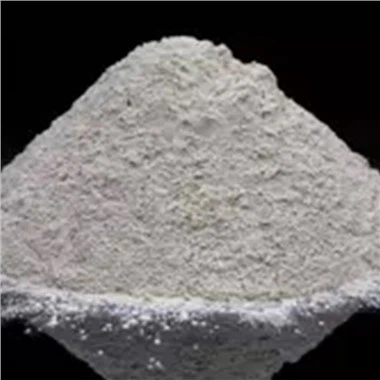
Hey there! As a supplier of CMC Carboxymethyl Cellulose, I often get asked about how this amazing substance functions as a thickener. So, let's dive right into it and explore the ins and outs of CMC's thickening properties.
What is CMC Carboxymethyl Cellulose?
First things first, let's quickly go over what CMC is. CMC, or Carboxymethyl Cellulose, is a cellulose derivative. That means it's made from cellulose, which is a natural polymer found in the cell walls of plants. Through a chemical process, carboxymethyl groups are added to the cellulose chains, changing its properties and making it super useful in a whole bunch of industries. You can find more about different types of CMC like Sodium Carboxymethyl Cellulose on our website.
How Does It Work as a Thickener?
Molecular Structure and Hydration
The secret behind CMC's thickening power lies in its molecular structure. CMC molecules are long chains with carboxymethyl groups attached at various points. When CMC is added to a liquid, these chains start to interact with water molecules. The carboxymethyl groups are hydrophilic, which means they love water. They form hydrogen bonds with water molecules.
As more and more water molecules get attracted to the CMC chains, the chains start to swell and expand. This swelling is like a sponge soaking up water. The CMC chains become more hydrated, and they start to take up more space in the liquid. This initial step of hydration is crucial because it sets the stage for the thickening process.
Entanglement of Chains
Once the CMC chains are hydrated and swollen, they start to interact with each other. The long, flexible chains get all tangled up like a bunch of spaghetti. This entanglement creates a network structure within the liquid.
As the liquid tries to flow, it has to move through this network of entangled CMC chains. The chains resist the flow of the liquid, making it more viscous. In simpler terms, the liquid becomes thicker. The more the chains are entangled, the higher the viscosity of the liquid will be.
Ionic Effects
The carboxymethyl groups on the CMC chains can also have an ionic charge. This charge can affect how the chains interact with each other and with other substances in the liquid. For example, in the presence of certain ions, like calcium ions, the negatively charged carboxymethyl groups can form bridges with the positively charged calcium ions.
This can lead to the formation of a stronger and more stable network structure. The result? An even thicker and more viscous liquid. Different salts and pH levels can also influence these ionic interactions, which means that we can control the thickening effect of CMC by adjusting these factors.
Factors Affecting CMC's Thickening Ability
Degree of Substitution (DS)
The degree of substitution refers to how many of the hydroxyl groups on the cellulose chains have been replaced with carboxymethyl groups. A higher DS means more carboxymethyl groups are present on the chains. This generally leads to better solubility and water - holding capacity.
CMCs with a higher DS can form more hydrogen bonds with water and entangle more effectively, resulting in greater thickening. However, there's a sweet spot. If the DS is too high, the chains can become too flexible, and the network might not form as well, reducing the thickening ability.
Concentration
It's pretty obvious that the more CMC you add to a liquid, the thicker it will get. But it's not a linear relationship. At low concentrations, the increase in viscosity might be modest. As the concentration rises, there comes a point where the chains start to entangle more readily, and the viscosity increases more rapidly.
However, if you add too much CMC, the liquid can become too thick and might even turn into a gel - like consistency, which may not be desirable depending on the application.
Temperature
Temperature can have a big impact on CMC's thickening function. As the temperature goes up, the kinetic energy of the molecules increases. This means the CMC chains move more freely, and the hydrogen bonds between the chains and water molecules can break more easily.
As a result, the viscosity of the solution usually decreases with increasing temperature. But when the temperature drops again, the hydrogen bonds can reform, and the viscosity can go back up. This is known as thermo - reversible behavior.
Applications of CMC as a Thickener
Food Industry
In the food world, CMC is a rock - star thickener. It's used in a wide range of products. For example, in dairy products like yogurt and ice cream, it helps to improve the texture. It thickens the product, making it creamier and more stable.
You can learn more about Food Grade Powder CMC on our site. It also prevents ice crystals from forming in ice cream, giving it a smoother mouthfeel. In salad dressings, CMC keeps the oil and water from separating, providing a consistent and thick texture.


Pharmaceutical Industry
In pharmaceuticals, CMC is used as a thickener in various formulations. It can be found in syrups, where it gives the right consistency for easy swallowing. It also helps in suspending insoluble particles in liquid medications, ensuring that the dose is uniform throughout the product.
Cosmetics Industry
Cosmetics like lotions, creams, and shampoos also benefit from CMC's thickening properties. It gives these products a smooth and luxurious texture. It helps to keep the ingredients well - mixed and prevents them from separating over time.
Why Choose Our CMC?
As a supplier, we take pride in offering high - quality Carboxymethyl Cellulose Sodium. Our CMC is carefully manufactured to have consistent properties. We control the degree of substitution, particle size, and other factors to ensure that it performs well as a thickener in different applications.
We also offer excellent customer support. If you have any questions about how to use CMC in your specific product or need help with adjusting the thickening effect, our team is here to assist you.
Let's Talk Business!
If you're in the market for a reliable CMC supplier, we'd love to hear from you. Whether you're in the food, pharmaceutical, or cosmetics industry, our CMC can meet your thickening needs. Reach out to us for more information, samples, or to start a purchase negotiation. We're ready to work with you to find the best CMC solution for your business.
References
- Davidson, R. L. (1980). Handbook of Water - Soluble Gums and Resins. McGraw - Hill.
- Whistler, R. L., & BeMiller, J. N. (Eds.). (1993). Industrial Gums: Polysaccharides and Their Derivatives. Academic Press.